
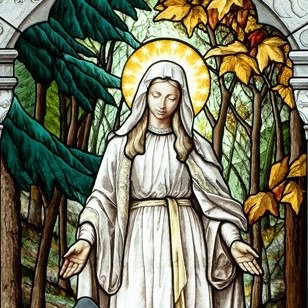
The Presentation of the Blessed Virgin Mary, kept each year on November 21, remembers the tradition that Sts. Joachim and Anne brought their young daughter to the Temple in Jerusalem and dedicated her to God. The event isn’t recorded in the Gospels; it comes from an ancient apocryphal source. The Church celebrates it for what it shows: Mary’s total gift of herself to God, long before the Annunciation.
Key takeaways
- The Presentation of Mary is a memorial on the Church’s calendar, celebrated every November 21.
- The story comes from apocryphal writings, not Scripture; the Church emphasizes Mary’s self-offering rather than the historical details.
- The feast began in the East in the 6th century and entered the Roman Missal in the 15th century.
- It honors the role of parents in a child’s religious formation.
- Mary stands as a bridge between the Temple of the Old Covenant and Christ, the new Temple.
What is the Presentation of the Blessed Virgin Mary?
Vatican News describes the memorial as recalling “the day on which Mary, while still a child, was brought to the temple in Jerusalem to be offered to God,” according to the apocryphal gospels. The Church, it adds, wants to emphasize “not so much the historical event in itself, of which there is no trace in the Gospels, but the total gift that Mary made of herself.”
The feast is old. It dates to the 6th century in the East, tied to the dedication of the Basilica of Saint Mary the New, built by Emperor Justinian I near the ruins of the Temple in Jerusalem. Monasteries in Italy kept it by the 9th century, and it entered the Roman Missal in the 15th century.
It is easy to overlook. On Iowa Catholic Radio’s Catholic Morning Show, host Bo Bonner noted that the Marian feasts that follow it, the Immaculate Conception, Our Lady of Guadalupe and Mary, Mother of God, are better known. He invited Fr. Tony Stephens, CPM, of the Fathers of Mercy, to explain why this quieter one matters.
Is the Presentation of Mary in the Bible?
No. Fr. Tony was direct about it: the story is “not something that is, strictly speaking, found in the scriptures.” It comes from one of the apocryphal gospels, writings the Church does not accept as inspired by the Holy Spirit.
That doesn’t make the tradition worthless. Some of those writings, Fr. Tony said, are “not bad history.” The heart of the story is simple and believable: Joachim and Anne saw their daughter as a gift from God and presented her at the Temple to be educated and formed in a life of prayer.
What does the feast teach about Mary’s virginity?
Fr. Tony connected that early formation to a question Mary later asked the angel Gabriel: “How can this be, since I have no relations with a man?” (Luke 1:34). Church Fathers and tradition, he explained, have read that question as a sign that Mary already understood herself as consecrated to God.
The Church teaches that Mary remained a virgin all her life. The Catechism of the Catholic Church says the Church confesses “Mary’s real and perpetual virginity even in the act of giving birth to the Son of God made man,” and that the liturgy celebrates her as Aeiparthenos, the “Ever-virgin” (CCC 499). It quotes St. Augustine: Mary “remained a virgin in conceiving her Son, a virgin in giving birth to him… always a virgin” (CCC 510).
The Catechism also teaches that God prepared Mary for her mission. To become the mother of the Savior, she “was enriched by God with gifts appropriate to such a role” (CCC 490). The Presentation celebrates one moment in that preparation.
Why does the Presentation matter for parents?
This feast quietly honors Joachim and Anne. Fr. Tony called it a unique feast “because it’s one where we acknowledge the role of the parents in the formation of the child.”
The Church asks the same of parents today. “Education in the faith by the parents should begin in the child’s earliest years,” the Catechism teaches. “Parents have the mission of teaching their children to pray and to discover their vocation as children of God” (CCC 2226). It calls the parents’ role in education so important “that it is almost impossible to provide an adequate substitute” (CCC 2221).
A simple way to keep November 21 at home: tell children the story of Mary’s presentation, thank God for the people who taught you to pray, and offer your family to God the way Joachim and Anne offered their daughter.
Did Mary live an ordinary life?
Yes, and that is part of the point. At the Temple, Fr. Tony said, Mary would likely have learned to read, write and pray alongside other girls her age. He mentioned a pious speculation that the prophetess Anna, who “never left the temple, but worshiped night and day with fasting and prayer” (Luke 2:37), might have been one of her teachers. If so, Anna would later meet Mary again when she and Joseph brought the infant Jesus to the Temple. Fr. Tony was careful to call this pious tradition, not established fact.
His summary: “Mary lived an ordinary human life, but she received some extraordinary graces” to live out that life.
How is Mary a bridge between the Old and New Covenants?
Mary was presented in the Temple of the Old Covenant. Then she gave birth to the One who called his own body a temple: “Destroy this temple and in three days I will raise it up… he was speaking about the temple of his body” (John 2:19, 21).
The Catechism describes Mary as the one in whom Israel’s long wait is fulfilled: “After a long period of waiting the times are fulfilled in her, the exalted Daughter of Sion, and the new plan of salvation is established” (CCC 489). Fr. Tony noted that she was a faithful, believing Jew whose faith was fulfilled in Christ. He offered an image for her place in the Church: “if Christ is the head, we can maybe think of her as the neck to the rest of the body of the church.”
Where is the National Shrine of Our Lady of Champion?
Fr. Tony serves as Director of Sacramental Life and Pastoral Care of Souls at the National Shrine of Our Lady of Champion in Champion, Wisconsin. According to the shrine, Mary appeared there in 1859 to Adele Brice, a Belgian immigrant, asking her to “gather the children in this wild country and teach them what they should know for salvation.” After a formal investigation, the bishop of Green Bay declared the apparition “worthy of belief” on December 8, 2010.
Adele’s cause for canonization is now open, and Bishop David Ricken of the Diocese of Green Bay has given her the title Servant of God. The cause’s website shares a prayer for it and ways to help.
Hear the whole conversation. Fr. Tony Stephens, CPM, talks with Bo Bonner about the Presentation of Mary in the first of a series on the season’s Marian feasts: listen on The Catholic Morning Show.
Start your weekday with The Catholic Morning Show, live 7–8 a.m. Central on Iowa Catholic Radio.
Listen live · Get the app for iPhone · Get the app for Android
Fr. Tony Stephens, CPM, is a priest of the Fathers of Mercy and Director of Sacramental Life and Pastoral Care of Souls at the National Shrine of Our Lady of Champion in Champion, Wisconsin.
Bo Bonner hosted this conversation for The Catholic Morning Show on Iowa Catholic Radio.
This article was written with AI assistance from an episode of The Catholic Morning Show, with names and facts checked against the episode’s show notes and the sources linked above.