
Emotional eating is reaching for food to meet a need that isn’t hunger: stress, sadness, loneliness or exhaustion. Willpower alone rarely fixes it. A Catholic approach starts somewhere gentler: noticing the pattern without shame, asking the Holy Spirit what you really need, and enjoying good food as a gift from God, with simple habits that slow you down.
Key takeaways
- Emotional eating usually points to a real need underneath; food is rarely the answer to it.
- Curiosity works better than shame: notice the pattern and ask what you need.
- The Church calls food a created good and temperance the virtue that “provides balance in the use of created goods.”
- Holiday food is meant to be enjoyed. “Whether you eat or drink… do everything for the glory of God.”
- Three simple habits: chew your food, empty your hands between bites, empty your mouth before the next bite.
What is emotional eating?
Most people know the scene. It’s 9 p.m., the day has been long, and you’re standing at the pantry door knowing you aren’t really hungry. Iowa Catholic Radio’s Catholic Morning Show host Janelle Menz opened her conversation with Catholic health coach Denise Jelinek with that very picture, and a question: as Catholics, we know we aren’t meant to fight spiritual battles alone, so why do we try to white-knuckle our health goals by ourselves?
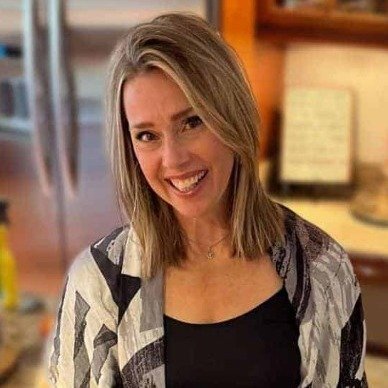
Denise, founder of Weight Loss with the Holy Spirit, describes herself as a former binge eater. Her answer is that overeating is rarely about the food. “There’s usually some sort of emotional need underneath of that,” she said.
If eating ever feels out of control, or is tied to distress you can’t manage alone, talk with your doctor or a licensed counselor. Asking for help is part of caring for the life God has given you.
Why doesn’t willpower stop emotional eating?
The usual cycle, Denise said, goes like this: we see ourselves doing something we hate, we judge and shame ourselves, we feel horrible, and then we want to eat more.
She also noted that many Catholic women have confessed gluttony for years without ever learning what to do differently. Secular dieting changes what you eat. It doesn’t address why.
Her alternative starts with awareness and curiosity instead of shame. When you catch yourself reaching for food, pause and get curious: “Something’s cooking underneath the surface here.” Then ask the Holy Spirit to show you what you need.
What does Ignatian discernment have to do with food?
Janelle connected the topic to St. Ignatius of Loyola. IgnatianSpirituality.com explains that discernment of spirits means becoming sensitive to the “motions of the soul,” our thoughts, emotions, desires and attractions, “reflecting on them, and understanding where they come from and where they lead us.”
That is close to what Denise teaches. “Our feelings aren’t dangerous, and our feelings help us know things about ourselves,” she said. Many of us were taught to push feelings down. Listening to them instead lets us ask what we really need: “Maybe we’re sad and we need comforting. Maybe we’re lonely and we need a friend.” Often, she said, “the answer often isn’t food.”
What does the Church teach about food and temperance?
Food is good. Denise put it simply: “God gave us taste buds, didn’t he?” St. Paul writes, “Whether you eat or drink, or whatever you do, do everything for the glory of God” (1 Corinthians 10:31).
The virtue that helps us enjoy good things well is temperance. The Catechism of the Catholic Church defines it as “the moral virtue that moderates the attraction of pleasures and provides balance in the use of created goods. It ensures the will’s mastery over instincts and keeps desires within the limits of what is honorable” (CCC 1809). Self-control is also listed among the fruit of the Spirit, alongside “love, joy, peace, patience” (Galatians 5:22–23): it grows by grace, not by white-knuckling.
The Church also teaches that “life and physical health are precious gifts entrusted to us by God” and that “we must take reasonable care of them” (CCC 2288). In the next paragraph, it warns against the opposite extreme: a “cult of the body” that idolizes physical perfection. Peace with food sits between those two.
How can you enjoy holiday food without overeating?
Denise’s program, Celebrate Not Sabotage, is built on the idea that women should be able to enjoy their Christmas and traditional favorites without guilt. Overeating a favorite food, she said, “is simply because you don’t have the skill to meet the real need that you have.” It is not a moral failure; it is a skill not yet learned.
Her approach starts with eating food you genuinely enjoy, then three basic habits:
- Chew your food.
- Empty your hands between bites. Put the fork down.
- Empty your mouth before you take the next bite.
“Those three habits slow you down to be more intentional to your food,” Denise said. The point, she explained, is “to bring more of peace and order into your relationship with food.”
A few simple ways to bring faith to the table this season: pray grace slowly and mean it, notice how you feel before you reach for seconds, and offer a quick prayer (“Lord, what do I need right now?”) when the pull toward the pantry comes from stress rather than hunger.
Where can you learn more?
Denise shares her approach at WeightLossWithTheHolySpirit.com and on her podcast, Weight Loss with the Holy Spirit.
Hear the whole conversation. Catholic health coach Denise Jelinek talks with Janelle Menz about emotional eating, the Holy Spirit and enjoying the holidays in peace: listen on The Catholic Morning Show.
Start your weekday with The Catholic Morning Show, live 7–8 a.m. Central on Iowa Catholic Radio.
Listen live · Get the app for iPhone · Get the app for Android
Denise Jelinek is a Catholic health and weight loss coach, the founder of Weight Loss with the Holy Spirit, and host of the podcast of the same name.
Janelle Menz hosted this conversation for The Catholic Morning Show on Iowa Catholic Radio.
This article was written with AI assistance from an episode of The Catholic Morning Show, with names and facts checked against the episode’s show notes and the sources linked above.