
St. Toribio Romo was a Mexican priest from Jalisco who kept bringing the sacraments to his people during the persecution of the Church in Mexico and was killed by soldiers on February 25, 1928, at 27. He is one of 25 martyrs of Mexico canonized by Pope John Paul II in 2000, and his story shows what it means to cry out “¡Viva Cristo Rey!” — “Long live Christ the King!”
Key takeaways
- St. Toribio Romo was born on April 16, 1900, in Santa Ana de Guadalupe, Jalisco, and was ordained a priest at 22.
- He was shot by soldiers early on the morning of February 25, 1928; his sister cried out, “Long live Christ the King!”
- Pope John Paul II canonized him with St. Cristóbal Magallanes and 23 other companion martyrs on May 21, 2000.
- The martyrs of the Cristero era made “¡Viva Cristo Rey!” their cry because they believed Christ’s kingship was worth more than their lives.
- Pope Pius XI taught that Christ must reign in our minds, wills, hearts and bodies.
Who was St. Toribio Romo?
According to his Vatican biography, prepared for his canonization, Toribio Romo González was born on April 16, 1900, in Santa Ana de Guadalupe, in the parish of Jalostotitlán, Jalisco. He later served as a vicar with the duties of a pastor in Tequila, Jalisco, in the Archdiocese of Guadalajara.
The Vatican describes him as a priest with a sensitive heart who prayed constantly and was deeply taken with the mystery of the Eucharist. He often prayed that the Lord would never let him go a single day without saying Mass.
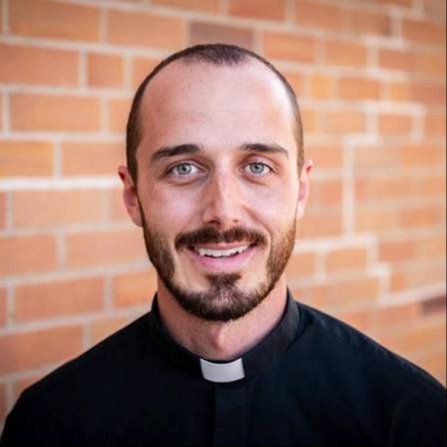
Fr. Ben Valentine, who serves the Waukon Area Pastorate in northeast Iowa, went looking into St. Toribio for a very personal reason: Spanish-speaking parishioners kept telling him he looks like the saint. On Iowa Catholic Radio’s Catholic Morning Show, he shared what he found. Toribio was ordained at 22, served in Jalisco, and, Fr. Ben said, “he had five different assignments in his five years as a priest.”
How did St. Toribio Romo die?
St. Toribio’s whole priesthood unfolded during a violent persecution of the Church in Mexico. He kept serving anyway. Fr. Ben put it plainly: “he was offering Holy Communion to people when he knew he was at the risk of his life.”
The Vatican biography records a prayer he once offered while holding the Host at a First Communion: “Lord, would you accept my blood, which I offer you for the peace of the Church?” (translated from the Vatican’s Italian text). Fr. Ben added that Toribio seemed to sense what was coming. He gave his brother, also a priest, a letter and told him not to open it.
The end came in the early hours of Saturday, February 25, 1928. After working through Friday and into the night to bring the parish records up to date, Toribio decided to sleep a little before celebrating Mass. A group of soldiers and others burst into the room, and one pointed him out as the priest. He was shot, staggered a few steps and was shot again. He was 27.
His sister was there. As Fr. Ben told it, she held his body and cried out, “Long live Christ the King.”
What does “¡Viva Cristo Rey!” mean?
“¡Viva Cristo Rey!” is Spanish for “Long live Christ the King!” Fr. Ben recalled that many of the martyrs who came out of the Cristero War in Mexico died “crying out, long live Christ the King!”
When Pope John Paul II canonized St. Cristóbal Magallanes and his 24 companion martyrs on May 21, 2000, he described what they endured in the first decades of the 20th century. Most were diocesan priests, and three were laymen who helped priests. “They did not stop courageously exercising their ministry when religious persecution intensified,” he said in his canonization homily. “They all freely and calmly accepted martyrdom as a witness to their faith, explicitly forgiving their persecutors.”
The pope also noted that the martyrs prayed to Our Lady of Guadalupe “at the supreme moment of their sacrifice.” The Church remembers St. Cristóbal Magallanes and companions, martyrs in Mexico, on May 21.
Why connect a martyr to Christ the King Sunday?
The feast of Christ the King was instituted by Pope Pius XI in 1925, only a few years before Toribio’s death, in the encyclical Quas Primas. Pius XI explained that Christ’s reign is meant to reach every part of us: “He must reign in our minds… He must reign in our wills… He must reign in our hearts… He must reign in our bodies and in our members” (Quas Primas 33).
The readings for the solemnity point to the same total claim. In the second reading, St. Paul writes that when everything is subjected to Christ, “the Son himself will [also] be subjected to the one who subjected everything to him, so that God may be all in all” (1 Corinthians 15:28). That line stayed with Fr. Ben. All time belongs to the Lord, he said, and all souls belong to him.
The Gospel, the judgment of the nations in Matthew 25, shows that the King will judge the living and the dead. Fr. Ben drew the connection: the way we live now, if we make Christ the King of our lives, will be made plain at the end. (For a closer look at those readings, see our guide to Christ the King Sunday and the sheep and the goats.)
How do you make Christ the King of your life?
Most of us will never be asked to die for the faith. But the martyrs answer a question every Christian faces, the one Fr. Ben put at the center of the feast: “what does it look like for Christ to be the king of your life?”
Host Deacon Mark Campbell offered one way in: if you know what you’re willing to die for, you know what to live for. A few ways to take that to prayer:
- Ask the question honestly. What would I give everything for? The answer shows who or what really reigns in my life.
- Treasure the Eucharist. St. Toribio begged never to go a day without Mass. Go to Mass this week as if it were worth the risk he took.
- Forgive someone. John Paul II stressed that these martyrs explicitly forgave their persecutors. Mercy is part of Christ’s kingship too.
- Pray with St. Toribio. Offer your work, your fatigue and your faithfulness “for the peace of the Church.”
Fr. Ben said this kind of life is not grim: “It brings zest and meaning to our life when we follow Jesus, and he just increases our joy.” Or, in the words of the psalm, “your love is better than life” (Psalm 63:4).
Hear the whole conversation. Fr. Ben Valentine talks with Deacon Mark Campbell about the Christ the King readings and the witness of St. Toribio Romo: listen on The Catholic Morning Show.
Start your weekday with The Catholic Morning Show, live 7–8 a.m. Central on Iowa Catholic Radio.
Listen live · Get the app for iPhone · Get the app for Android
Fr. Ben Valentine serves the Waukon Area Pastorate in northeast Iowa and is a regular guest on The Catholic Morning Show.
Deacon Mark Campbell hosted this conversation for The Catholic Morning Show on Iowa Catholic Radio.
This article was written with AI assistance from an episode of The Catholic Morning Show, with names and facts checked against the episode’s show notes and the sources linked above.