
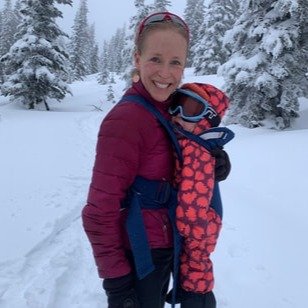
The Catholic Church teaches that health is a gift from God that we should care for, without making the body an idol. Scripture calls the body “a temple of the holy Spirit,” and the Catechism asks for “reasonable care” of our health while rejecting the “cult of the body.” Olympic cross-country skier Rebecca Dussault, founder of Fit Catholic Mom, shows how that balance can look in everyday life.
Key takeaways
- “Life and physical health are precious gifts entrusted to us by God,” and we should take “reasonable care of them” (CCC 2288).
- The Church rejects “a neo-pagan notion that tends to promote the cult of the body” (CCC 2289), so fitness is never about perfection or vanity.
- St. Paul tells Christians to “glorify God in your body” (1 Corinthians 6:20).
- Prayer and movement can go together: a walking rosary, a stretching rosary, or praying for someone with each piece of laundry you fold.
- Small, steady habits matter more than big, rare efforts.
What does the Catholic Church teach about exercise?
The Church doesn’t hand out workout plans, but it does say a lot about the body. Paragraph 2288 of the Catechism of the Catholic Church begins: “Life and physical health are precious gifts entrusted to us by God. We must take reasonable care of them, taking into account the needs of others and the common good.”
The very next paragraph sets the limit. Morality “requires respect for the life of the body,” but “it does not make it an absolute value.” The Catechism rejects “a neo-pagan notion that tends to promote the cult of the body” and warns against the temptation “to idolize physical perfection and success at sports” (CCC 2289).
So a Catholic approach to fitness sits between two mistakes: neglecting the body God gave us, and worshiping it.
Rebecca Dussault, who competed in cross-country skiing at the 2006 Winter Olympics in Torino, described the same balance on Iowa Catholic Radio’s Catholic Morning Show. “And it’s not a perfectionism,” she said. At the same time, she added, “We work out our salvation with our body as well.”
What does “your body is a temple of the Holy Spirit” mean?
The phrase comes from St. Paul: “Do you not know that your body is a temple of the holy Spirit within you, whom you have from God, and that you are not your own? For you have been purchased at a price. Therefore, glorify God in your body” (1 Corinthians 6:19–20).
Paul’s point is that the body belongs to God and is meant for his glory. Dussault draws a comparison to our churches: we want a church to be beautiful and worthy of the Lord who comes to us there. In the same way, she asks, if we are made in God’s image, what are we doing with that image?
She also points to St. Paul’s speech in Athens, where he says of God, “In him we live and move and have our being” (Acts 17:28). For her, that verse is a reminder that body and soul aren’t separate projects. “We need to move our flesh to have a healthy expression,” she said.
Can exercise be a form of prayer?
Dussault’s faith and her sport met early. She found cross-country skiing at age nine in her small Colorado town. On a moonlight ski with her parish priest, the snow was so deep that he told everyone to ski up to receive Communion. Looking back, she said, “receiving the Eucharist on skis definitely left its mark.”
As an adult athlete, she came to see hard training as a chance for intercession: when exercise is difficult, the effort can be offered for someone else. She also came to see endurance sport itself as mission territory. Of the athletes around her, she said, “These people need the gospel.”
How did St. Pier Giorgio Frassati inspire a Catholic Olympian?
St. Pier Giorgio Frassati, a young Catholic who loved the mountains, became a model for Dussault’s Olympic run. At 24, she came across a photo of him on cross-country skis in Torino, the same city that would host her Olympics. Her Olympic ring is engraved with his name.
Pope Leo XIV canonized Frassati on September 7, 2025. In his homily for the canonization Mass, the pope recalled a photo of Frassati climbing a mountain, on which the young man wrote one word: “Upwards.” For Catholics who hike, ski or run, he is a reminder that the outdoors and a life of holiness can go together.
How can busy Catholics pray and move at the same time?
Dussault, who coaches Catholic women through Fit Catholic Mom, suggests starting with habits you already have. A few ideas:
- Make your rosary a walking rosary. If you pray a daily rosary, pray it on a walk, even around your own neighborhood. You may find yourself praying for the neighbors whose houses you pass.
- Try a stretching rosary at home. If you can’t get outside, use the time for gentle stretching or strength work while you pray.
- Stack your habits. Ride a stationary bike while you listen to a Catholic podcast or a faith-formation talk you already enjoy.
- Turn chores into prayer. Do lunges and squats while you fold laundry. In Dussault’s words, “every garment tells us who to pray for.” One shirt is a prayer for a child; one towel is a prayer for a friend.
Not every rosary needs to be prayed this way, she noted, but it’s an easy way in for Catholics who need to move more.
Why small habits matter more than big goals
You don’t need to become an elite athlete to care for your health well. Dussault’s closing advice was simple: “we are what we consistently do, not what we seldom do.”
That fits the Catechism‘s call for “reasonable care.” A daily walk, a few minutes of stretching or a short prayer offered while you work out can, over time, do more than an occasional burst of effort, and each one can be offered to God.
Hear the whole conversation. Rebecca Dussault talks with Janelle Menz about receiving Communion on skis, St. Pier Giorgio Frassati and simple ways to pray while you move: listen on The Catholic Morning Show.
Start your weekday with The Catholic Morning Show, live 7–8 a.m. Central on Iowa Catholic Radio.
Listen live · Get the app for iPhone · Get the app for Android
Rebecca Dussault is an Olympic cross-country skier, wife, mother and speaker, and the founder of Fit Catholic Mom (@fitcatholicmom on social media).
Janelle Menz hosted this conversation for The Catholic Morning Show on Iowa Catholic Radio.
This article was written with AI assistance from an episode of The Catholic Morning Show, with names and facts checked against the episode’s show notes and the sources linked above.