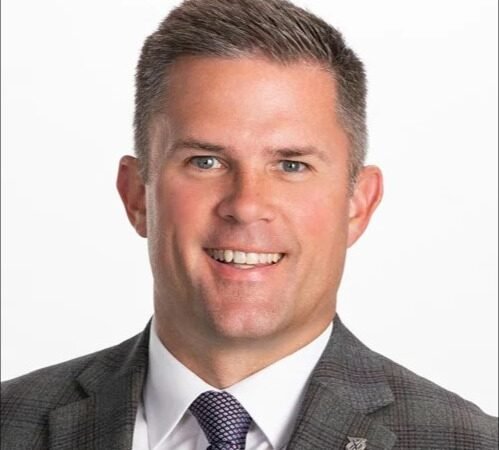
Parents are a child’s first teachers in the faith, and the Church says they should encourage each child’s vocation, “fostering with special care any religious vocation.” A Catholic school can’t replace that, but it can reinforce it every day. Chris McCarville, president of Xavier Catholic Schools in Cedar Rapids and Marion, calls the school one piece of the puzzle.
Key takeaways
- The Catechism says parents “have the first responsibility for the education of their children” (CCC 2223).
- Parents also have the right, and as far as possible the duty, to choose schools that help them as Christian educators (CCC 2229).
- The Church asks families to encourage each child’s vocation and to welcome a call to priesthood or consecrated life “with joy and thanksgiving” (CCC 2233).
- A Catholic school’s strength is consistency: the same encouraging message about God’s call, in age-appropriate ways, from kindergarten through 12th grade.
- The first vocation of every Christian is to follow Jesus, whatever path comes after (CCC 2232).
What is a vocation, in Catholic terms?
Many people hear “vocation” and think only of priests and nuns. The Church uses the word more broadly. The Catechism of the Catholic Church says that as a child grows up, “his unique vocation which comes from God asserts itself more clearly and forcefully,” and parents “should respect this call and encourage their children to follow it” (CCC 2232).
Before any particular path, there is a call every Christian shares. Parents “must be convinced that the first vocation of the Christian is to follow Jesus” (CCC 2232). Marriage, priesthood, religious life and single life all grow out of that first “yes” to Christ.
The Catechism also speaks directly to priesthood and consecrated life: “Parents should welcome and respect with joy and thanksgiving the Lord’s call to one of their children to follow him in virginity for the sake of the Kingdom in the consecrated life or in priestly ministry” (CCC 2233).
Who is responsible for forming a child’s faith?
The Church is clear that the answer starts at home. “Parents have the first responsibility for the education of their children,” says the Catechism (CCC 2223). Through the sacrament of marriage, parents receive “the responsibility and privilege of evangelizing their children,” and are the “first heralds” of the faith for them (CCC 2225). They have “the mission of teaching their children to pray and to discover their vocation as children of God” (CCC 2226).
The Catechism‘s section on the family quotes the Second Vatican Council on the same point: parents should “encourage them in the vocation which is proper to each child, fostering with special care any religious vocation” (CCC 1656).
McCarville, speaking on Iowa Catholic Radio’s Catholic Morning Show, said Catholic schools see themselves the same way. “We should never be the first educators of the faith,” he said. The school is one piece of a lifelong faith journey that begins with families and parishes.
How can a Catholic school support vocations?
If parents come first, what does a school add? McCarville pointed to time. A school has students from the first bell to the last, plus activities before and after. That gives teachers, coaches and priests a daily opportunity to reinforce what families are teaching at home.
The Church also recognizes that choice of school matters. “As those first responsible for the education of their children, parents have the right to choose a school for them which corresponds to their own convictions,” the Catechism says. “As far as possible parents have the duty of choosing schools that will best help them in their task as Christian educators” (CCC 2229).
Here is what that support can look like in practice, based on how Xavier Catholic Schools describes its approach:
- A consistent message. From kindergarten through 12th grade, students hear the same idea in age-appropriate ways: God may be calling you, and if he is, it’s worth pursuing.
- Encouragement, not pressure. The message is positive. If a student senses a call, the next step is to talk with a parish priest.
- Priests who are present. In some schools priests are in the building, so those conversations can happen naturally.
- Attention to key moments. First Communion, Confirmation and graduation are natural times when faith is on a student’s mind.
- A wider network. Strong families, parishes and diocesan support all work together. A school is an extension of the parishes and of the wider Church.
McCarville said that when a former student becomes a priest or religious, it is first of all a sign of how the Holy Spirit works: “you never know the workings of the Holy Spirit.”
Why does vocation talk matter more in a digital age?
Young people today are surrounded by voices telling them what they could do, who they could be and what everyone else is doing. Host Janelle Menz noted that this can make discernment confusing and overwhelming.
McCarville agreed that this is exactly why steady, repeated encouragement matters now. A child who hears, year after year, that God has a plan for his or her life has a reference point when the noise gets loud. That fits the Catechism‘s picture of the home as “the first school of Christian life” (CCC 1657), with the school building on that foundation.
What does “forming disciples unafraid” mean?
Xavier Catholic Schools, the unified Catholic school system of Cedar Rapids and Marion in the Archdiocese of Dubuque, states its mission as forming “disciples unafraid to follow Jesus Christ.” McCarville said the phrase felt a little daunting when the system adopted it, because it sets a high bar.
He wants graduates to take what they learned at home, in their parishes and in school out into a chaotic world, and to live their faith unapologetically. The goal reaches past graduation. “Our focus is on helping to lead young souls to heaven,” he said.
The system is also investing in buildings. According to the episode’s show notes, Xavier bought and renovated the former Toyota Financial Services building in Cedar Rapids for a new Xavier Middle School, with an addition that includes a chapel and a gym. It is scheduled to open in fall 2027, the first new Catholic school building in Cedar Rapids since Xavier High School opened in 1998. The middle and high schools will be about a mile apart, so students can share spaces and classes.
A question for parents
Whether your children attend a Catholic school, a public school or learn at home, the Church’s teaching puts the same question in front of every family: does my child hear, from me, that God may be calling him or her? A school can echo that message. It can’t start it.
Hear the whole conversation. Chris McCarville talks with Janelle Menz about vocations, Xavier’s new middle school and the mission to form disciples unafraid: listen on The Catholic Morning Show.
Start your weekday with The Catholic Morning Show, live 7–8 a.m. Central on Iowa Catholic Radio.
Listen live · Get the app for iPhone · Get the app for Android
Chris McCarville is president of Xavier Catholic Schools, the Catholic school system of Cedar Rapids and Marion in the Archdiocese of Dubuque. He previously spent three years with the Diocese of Des Moines.
Janelle Menz hosted this conversation for The Catholic Morning Show on Iowa Catholic Radio.
This article was written with AI assistance from an episode of The Catholic Morning Show, with names and facts checked against the episode’s show notes and the sources linked above.